




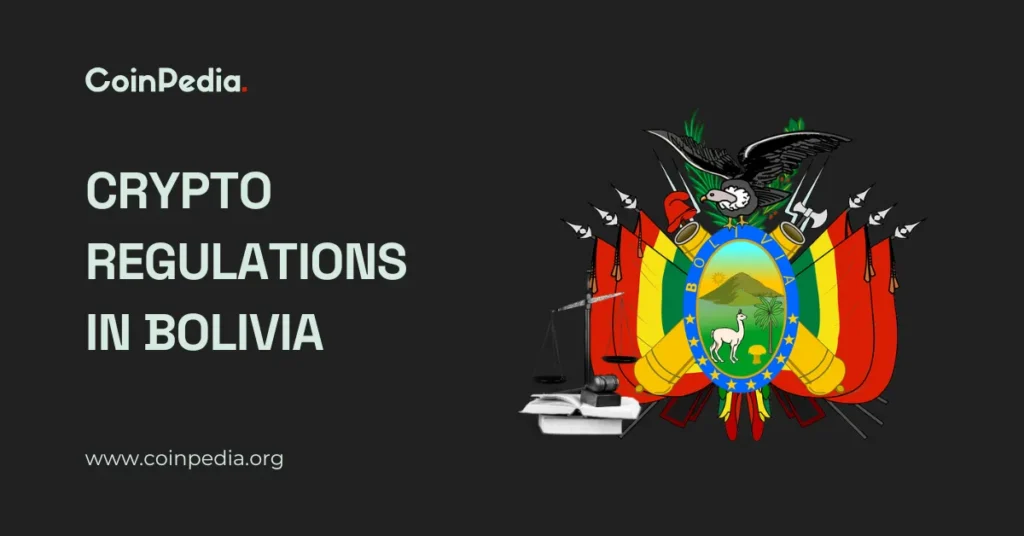
Cryptocurrency As of 2025, Bolivia’s crypto regulations are evolving dramatically, from a historical ban to allow banks to operate crypto. While trading or owning stablecoins has been legalized in Bolivia, their use for business payments is not permitted, and they are not considered legal tender. Stablecoins transactions in Bolivia are only allowed via an authorized bank. Table of contents Crypto Regulations in Bolivia 2025 What is the Bolivian government saying about crypto? Crypto License in Bolivia 2025 Crypto tax in Bolivia 2025 Crypto adoption rate in Bolivia 2025 Conclusion FAQs May 23, 2025 , YPFB Bans Executive Order 5399 bans the state-owned oil company from purchasing crypto to make payments. After the rise of stablecoin in the crypto market, the oil company’s traders tried to use crypto for profit dollar trading within the company. However, this statement was later denied by the YPFB president, saying they are not using crypto assets. May 7, 2025, Supreme Decree No. 5384 The Bolivian government confirms recognition of disruptive technologies– blockchains, tokenized assets, virtual assets, and Virtual Asset Service Providers (VASPs). Recognizes financial technological companies of the country, establishing a legal framework that enables startups and developing fintechs. April 16, 2025- Resolution no. 019/2025 Laid the groundwork for the initial recognition of virtual assets and virtual asset service providers (VASP). Marking a milestone by lifting the old restrictions and recognizing fintech developing frameworks. Crypto regulation summary Date Law Details May 23, 2025 Ban YFPB crypto use YPFB plans to use crypto for fuel imports; later banned by the government June 26, 2024 Resolution No. 82/2024 Lifted crypto ban, allowed virtual assets 2024 Resolution No. 082/2024 Supported crypto adoption for financial growth 2022 Crypto ban continues Banks are not allowed to operate crypto transactions December 15, 2020 Resolution N° 144/2020 Reaffirms the crypto ban May 6, 2014 Crypto Ban BCB banned crypto to protect Bolivia What is the Bolivian government saying about crypto? Public awareness: After lifting the crypto ban in the country, the Bolivian government launched public awareness campaigns to teach people about crypto basics, risks, and how digital assets work. Consumer protection: The Central Bank of Bolivia (BCB) officials are drafting crypto regulations focusing on transparency, safety, and innovation. It aims to prevent crypto scams while balancing rules and technology. USD-pegged stablecoins: In March 2025, the BCB utilized USD-pegged stablecoins for cross-border payments, remittances, and trading. It also traded crypto exchanges as a store of value in countries with volatile local currency. Crypto License in Bolivia 2025 Is there any crypto license in Bolivia? No, Bolivia does not have a specific crypto license. The government is currently prioritizing financial stability and capital preservation for digital assets. Hence, no license is required to conduct legal crypto activities in Bolivia. Crypto tax in Bolivia 2025 No capital gains tax: There is no specific tax legislation regarding crypto in Bolivia. While the standard taxes, like VAT/GST, are applied to goods or services purchased, crypto profits would likely be taxed under PIT (personal income tax). CIT: Hence, mining, staking, » …
About Post Author




More Stories
Latest CLARITY Act Approval Chances Fall Sharply Ahead of Senate Return in Cryptocurrency
Latest Digital assets lead 26% of APAC cross-border payment discussions in Cryptocurrency
Latest XRP Open Interest Climbs Above Average as Price Slips Near $1.02 in Cryptocurrency